
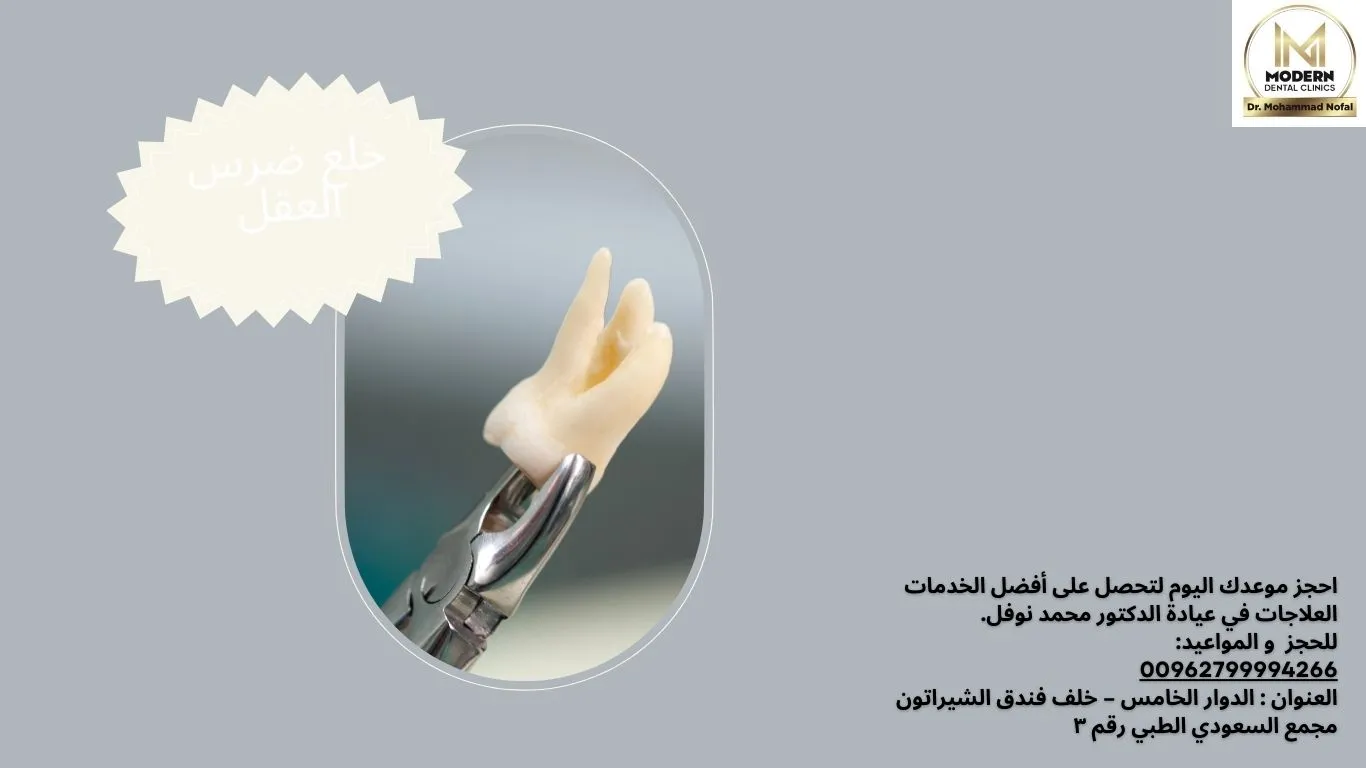
Wisdom tooth extraction is a common surgical procedure that many people undergo at different stages of their lives, because it may cause problems when it does not have enough space to grow or when it grows in an unhealthy way.
In this article, Dr. Mohammad Khaled Nofal, specialist in dentistry, cosmetic dentistry, and dental implants, explains everything you need to know about wisdom tooth extraction: when is it necessary? The procedures followed during the extraction, and how to care for the mouth after the extraction to ensure a fast and safe recovery.
Wisdom tooth extraction: when is it necessary?
It is considered a common surgical procedure, and it may be necessary in some cases, when the following symptoms appear:
Severe pain
One of the signs indicating the need to extract this tooth is when you feel pain in the teeth, and this applies particularly when the pain does not disappear or subside even after brushing and flossing the teeth or taking painkillers.
In general, the pain often comes from the back of the mouth where the wisdom tooth is located, as some people feel as if something is pressing on the jaw or gums, and in other cases the pain can spread to other areas of the mouth.
Gum swelling
Gum swelling is one of the symptoms that indicate the need to extract the wisdom tooth, as it may lead to irritation of the gums, and this in turn leads to a feeling of discomfort and heat.
Tooth crowding
One of the biggest problems related to wisdom teeth is that they are larger than normal, and most mouths simply do not have space to accommodate them, so when a wisdom tooth is left to grow for too long, it can shift the existing teeth.
This confirms the need to remove the wisdom tooth, as tooth crowding makes some people unable to obtain a straighter smile even with braces.
Jaw problems
The ability to open and close the jaw properly is an important aspect of health and well-being in general; some people cannot have proper digestion without being able to chew and process food well, which cannot happen if the movement of the jaw is impaired.
Persistent cavities
Wisdom teeth, especially those that have erupted partially and at strange angles or that have caused crowding, can break in such a way that a person cannot brush their teeth completely.
This means that the teeth have become more prone to plaque buildup and decay, and therefore when a person develops decay continuously it may lead to repeated infection in the soft tissues behind the last molar in the lower jaw.
Reasons for wisdom tooth extraction
Below are some of the reasons that may necessitate the need for wisdom tooth extraction:
Abnormal growth
When the wisdom tooth grows at an abnormal angle, it may put pressure on the neighboring teeth, leading to pain and damage to the other teeth.
Lack of space for its growth
If there is not enough space in the jaw for the new wisdom tooth to grow properly, it may become trapped under the gum, causing inflammation and pain.
Gum inflammation and decay
The wisdom tooth may become inflamed or decayed easily due to the difficulty of cleaning it properly, which requires its extraction.
Erosion of neighboring teeth
The wisdom tooth may cause erosion of or damage to the neighboring teeth as a result of the excessive pressure on them.
Read also: Removable dentures and the top 5 tips for caring for them
Problems caused by the wisdom tooth
The third molars in order, located at the back of the mouth, do not need to be extracted if they are:
Healthy.
Fully grown and erupted.
In their correct position and bite well when chewing.
Able to be cleaned daily.
But wisdom teeth usually are not given room to grow properly and may grow at different angles in the jaw, and this may lead to many problems.
These problems include the following:
Impaction of the wisdom tooth within the jaw
If the wisdom teeth are unable to grow in the usual way, they may become stuck within the jaw, and this condition is called impacted wisdom teeth.
This sometimes leads to an infection, or the appearance of a cyst that may damage the roots of the other teeth.
Increased risk of gum disease
Due to the difficulty of seeing and cleaning the back of the mouth, wisdom teeth that partially protrude can allow bacteria to enter the gums, and this in turn can cause gum disease and infection.
In addition, this tooth that partially protrudes through the gum can also develop decay, which cannot be repaired with fillings and therefore must be extracted.
Crowding of the neighboring teeth
If these molars do not have enough room to grow properly, they may crowd or damage the neighboring teeth, so the dentist recommends extracting them if they do not fully erupt.
It is worth noting that in many cases, extraction at a young age, that is from the age of 15 to 20 years, is easier, safer, and requires less recovery time compared to extraction at a later stage of life, due to the incomplete growth of the roots, the lower density of the jaw bones, and the faster recovery from surgery in general.
How the wisdom tooth extraction is performed
Extracting a wisdom tooth usually takes an hour or less, and in complicated cases it may take longer.
The wisdom tooth is extracted through the following steps:
The dentist examines the wisdom tooth and takes X-rays of the teeth to determine their exact location.
The dentist administers a local anesthetic to the teeth and gums to prevent pain and make the patient more comfortable.
The dentist makes incisions in the gum if necessary to expose the tooth impacted in the gum or jaw bone.
The dentist begins to loosen the wisdom tooth and carefully lift it from its place, and in some cases the dentist may need to divide the tooth into sections to facilitate the extraction process.
The dentist cleans the area to check that there is no infection.
The dentist closes the stitches at the surgical site if necessary, and then gauze is placed on the area to slow the bleeding.
What to expect after wisdom tooth extraction?
You may feel the following:
Mild discomfort.
Slight bleeding.
Swelling.
In addition, the dentist will give you some necessary instructions, which include:
Leave the gauze in place for about 30 minutes or an hour after the surgery, and replace it with clean gauze if necessary.
Get enough rest as much as you can, as you should stay at home and recover for at least three to five days, especially if you have a job that requires physical effort, you may need to wait longer before returning to work.
Use an ice pack for 20 minutes several times a day to help reduce swelling.
Keep the affected area clean by using an alcohol-free antibacterial mouthwash.
Brush and floss the rest of your teeth every day to reduce the risk of infection.
Take all medications as prescribed by the dentist.
Do not eat hard, crunchy, or chewy foods, as they may damage your gums during healing and cause pain.
Avoid drinking carbonated beverages or beverages that contain alcohol, as these beverages can dislodge blood clots and cause dryness.
Read also: The best types of dental restorations
How long does recovery from wisdom tooth extraction take?
The recovery time after wisdom tooth extraction takes from one to two weeks on average, but most people can return to their routine lives within approximately 3 to 5 days.
Wisdom tooth extraction requires a careful assessment by the dentist, so if you suffer from any of the symptoms mentioned above, it is essential to see the dentist to assess your condition and determine whether wisdom tooth extraction is necessary for you.
Always remember that prevention is best, and that maintaining oral health through daily care and regular checkups can prevent the need for wisdom tooth extraction in many cases.
References:
Wisdom teeth removal: When is it necessary? (2023, November 22). Mayo Clinic. https://www.mayoclinic.org/diseases-conditions/wisdom-teeth/expert-answers/wisdom-teeth-removal/faq-20058558
Higdon, K. (2023, August 20). 7 signs you may need your wisdom teeth removed. Knoxville Oral & Maxillofacial Surgery. https://knoxoms.com/7-signs-you-may-need-your-wisdom-teeth-removed/
Wisdom Teeth: Should I Have My Wisdom Teeth Removed? (n.d.). My Health Alberta. https://myhealth.alberta.ca/Health/Pages/conditions.aspx?hwid=aa143778&lang=en-ca
Professional, C. C. M. (n.d.-al). Wisdom teeth removal. Cleveland Clinic. https://my.clevelandclinic.org/health/treatments/22119-wisdom-teeth-removal
Taylor, M. (2014, September 25). Do I need to have my wisdom teeth removed? WebMD. https://www.webmd.com/oral-health/wisdom-teeth-removal-necessary