
Dental care is an essential part of a person's overall health, and despite all the efforts made to keep the teeth sound and healthy, problems may arise that require special treatment procedures. One of these problems is nerve inflammation, which in some cases may require a root canal. But when does a tooth truly need one? And what are the signs and symptoms that may indicate the need for such procedures?
In this article, Dr. Mohammad Khaled Nofal, specialist in dentistry, cosmetic dentistry, and dental implants, answers your question about when a tooth needs a root canal, in addition to other information that may interest you.
When does a tooth need a root canal?
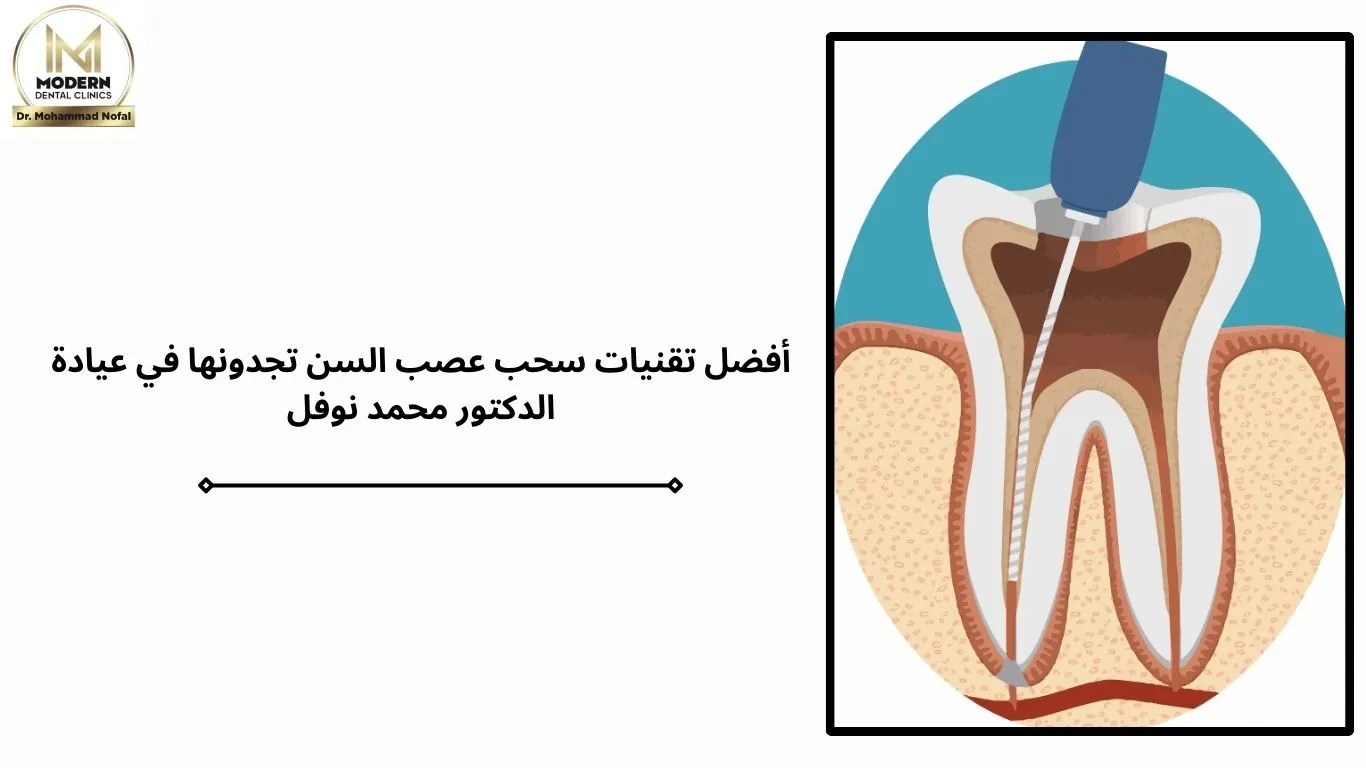
A root canal treatment, also known as endodontic treatment, is a medical procedure in which the damaged or infected nerve inside the tooth is removed. This procedure is often performed to treat nerve inflammation and eliminate the infection and the accompanying pain.
As for your question about "when does a tooth need a root canal?", the answer is: the signs and symptoms that appear and indicate that the patient needs a root canal vary from person to person, but in most cases they include the following:
Persistent pain
Persistent tooth pain is one of the signs that indicate a person needs a root canal, as the pain may cause discomfort in the teeth all the time, and it may develop into severe pain while chewing or biting.
In addition, the pain may spread to the jaw, face, or other teeth, and this means that the patient has an infection.
Excessive tooth sensitivity when consuming cold and hot drinks
Some people feel tooth sensitivity when eating warm food or drinking a cup of coffee or a glass of iced water.
This sensitivity may feel like a mild ache or a sharp pain, and this may be an indicator of injury or damage to the blood vessels and nerves inside the tooth, and therefore the person may need a root canal.
Change in tooth color
An infection can cause a change in tooth color, as the tooth may take on a black or gray appearance, which means there is a lack of blood supply, indicating a possible need for a root canal.
Gum swelling
Swelling of the gum near the painful tooth can be a sign of a problem requiring a root canal, as it may be painful when touched, in addition to the appearance of clear swelling outside the area of the root tip.
Gum pimples
Small pimples may also appear on the gum, and this is called an abscess, as they may discharge pus from the infection present in the tooth, and this leads to bad breath.
Pain when eating or when touching the tooth
If the teeth are sensitive when touched or when eating, this may indicate severe tooth decay or nerve damage, and this may lead to the need for a root canal.
A broken or cracked tooth
When a tooth is affected by a fracture or accident, bacteria can settle and lead to inflammation and infection, and this may damage the tooth's nerves. In addition, the nerve may become inflamed and cause pain and sensitivity, which may require a root canal.
Tooth movement
When a tooth becomes infected, a person may feel a looseness, and this may lead to the death of the nerves and then the softening of the bone around the tooth root, causing tooth movement.
In general, we point out an important note that dental infections may cause serious problems if left untreated, such as the infection spreading to other teeth and damage to the jaw bone.
Therefore, you should see the dentist to receive the appropriate evaluation and treatment.
Read also: Immediate dental implants
Why does a person need to have a root canal?
A person may need to have a root canal if bacteria accumulate inside the teeth and cause inflammation of the tooth pulp. The tooth pulp may thus be exposed to bacteria if:
The person has a deep cavity that needs treatment.
The person has a broken or damaged tooth.
The method of performing a root canal
Often, a root canal can be a simple, routine procedure, as its steps include the following:
The dentist takes an X-ray of the affected tooth to determine whether the tooth is dead, infected, or inflamed.
The dentist gives the patient a local anesthetic to numb the area and prevent pain.
The dentist places a thin, flexible rubber piece over the affected tooth and the adjacent gum to keep the tooth dry during treatment.
A small hole is drilled in the crown of the tooth to reach the tooth pulp.
The infected area inside the tooth canal is then carefully removed, and the root canal is cleaned and prepared.
The dentist places a material to seal the canal and then performs a restoration to cover the opening at the top of the tooth.
Is a root canal procedure painful?
Since most patients are anesthetized, root canal treatment is no more painful than a regular dental procedure, such as an ordinary filling or wisdom tooth removal.
However, a root canal is often generally slightly painful or numb after the procedure, and it can cause mild discomfort for a few days.
How long does it take to recover from a root canal?
Although a person is likely to feel numbness and pain for 2–4 hours after the procedure, they can return to school or work immediately after the procedure.
However, the following instructions must be followed carefully to speed up recovery:
Eat soft foods in the first few days after treatment, such as mashed potatoes, cheese, and smoothies.
Avoid chewing on the treated tooth.
Avoid smoking, as it makes it more difficult for the teeth to heal.
Brush the teeth after every meal.
Use an antibacterial mouthwash.
Complications of not treating a root canal
Delaying treatment increases the likelihood of the following:
Loss of the affected tooth.
The infection spreading to other teeth.
The infection spreading to the jaw bone.
Tips to protect the teeth and prevent the need for a root canal
Dr. Mohammad Nofal offers you some tips that help prevent tooth decay and other dental problems that may lead to a root canal, including the following:
Visit the dentist for examinations and a comprehensive assessment every 6 months.
Brush your teeth at least twice a day with a toothbrush and toothpaste.
Use dental floss between your teeth at least once a day.
Have your teeth professionally cleaned by the dentist at least once a year.
Try to limit the amount of sugary foods and carbohydrates, as these foods tend to stick to your teeth and may lead to many problems.
Read also: Maintaining the teeth after a Hollywood smile
In the end, a root canal is a procedure that helps save the affected tooth and avoid extracting it. Although many people may feel anxious about this procedure, modern advances in dentistry have made the process less painful and more effective.
If you are experiencing tooth pain or think you may need a root canal, visit the dental clinic of Dr. Mohammad Nofal, where he will provide you with the appropriate solution and treatment.
Sources
- When do you need a root canal? (n.d.). https://www.deltadental.com/us/en/protect-my-smile/procedures/root-canal/when-do-you-need-a-root-canal.html
- American Association of Endodontists. (2023, May 18). What is a Root Canal? – American Association of Endodontists. https://www.aae.org/patients/root-canal-treatment/what-is-a-root-canal/
- Hecht, M. (2019, December 20). Do you need a root canal? 7 telltale symptoms. Healthline. https://www.healthline.com/health/do-you-need-a-root-canal-7-common-telltale-symptoms#bottom-line
- Professional, C. C. M. (n.d.-ab). Root canal. Cleveland Clinic. https://my.clevelandclinic.org/health/treatments/21759-root-canal
- When is a Root Canal Really Necessary? 8 Signs You Need a Root Canal. (2023, March 20). https://www.completehealthdentistryofnepa.com/signs-you-need-a-root-canal-dentist-in-honesdale-pa
- Website, N. (2022a, February 3). Root canal treatment. nhs.uk. https://www.nhs.uk/conditions/root-canal-treatment