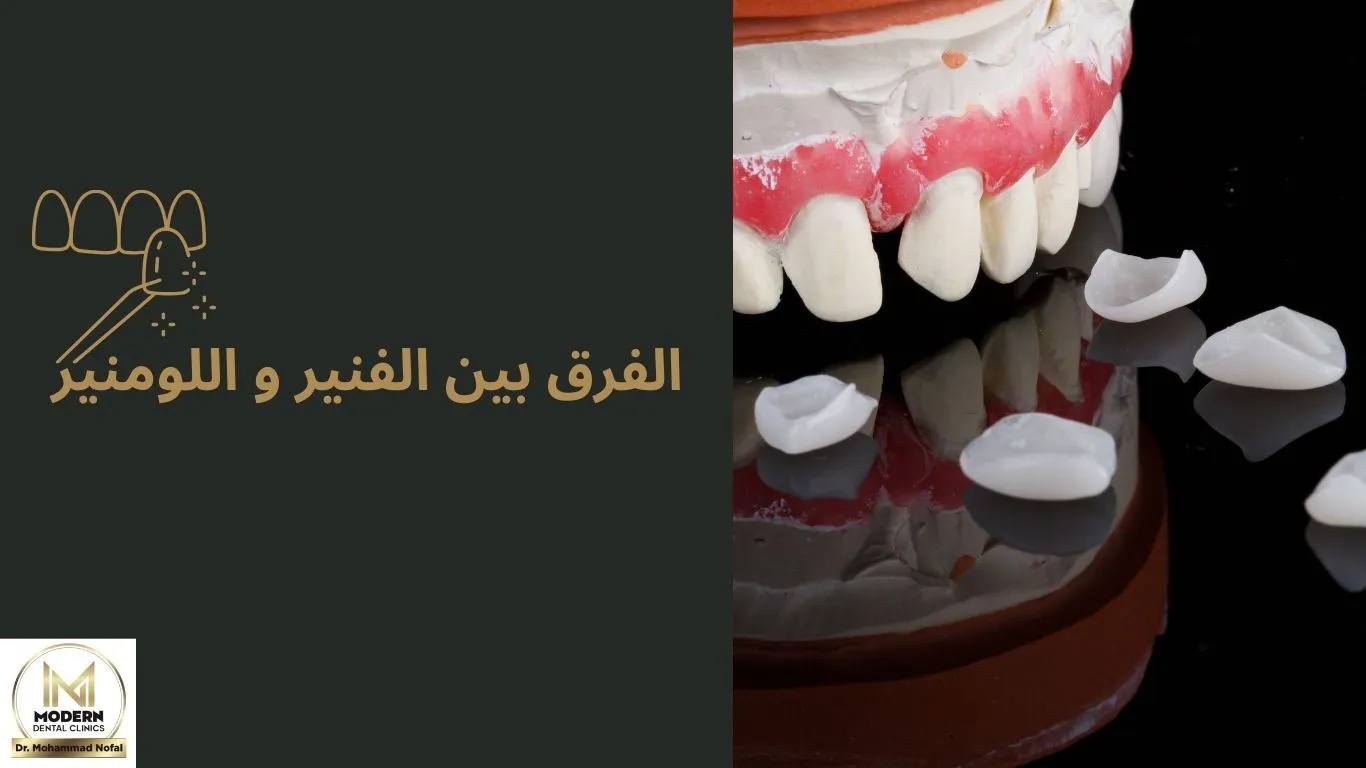
The difference between veneers and Lumineers
In the advanced, constantly evolving world of dentistry, there are many options available to improve the appearance of the teeth and make them look more beautiful and harmonious. Among these available options, veneers and Lumineers stand out as one of the most famous and sought-after procedures. Although both procedures aim to improve the appearance of the teeth, they have different characteristics and techniques. In this article, Dr. Mohammad Khaled Nofal, specialist in dentistry, cosmetic dentistry, and dental implants, explains the difference between veneers and Lumineers and what distinguishes each of them, to help you make the right decision when choosing the appropriate procedure to improve the appearance and beauty of the teeth.
The difference between veneers and Lumineers: points of difference
Veneers and Lumineers are two common cosmetic procedures in dentistry, but they have some fundamental differences in design, application, and effect on the teeth. Here are the main differences between them:
The material they are made of
The difference between them is as follows:
Veneers, or ceramic shells
Veneers are usually made of porcelain or composite resin. They are a thin shell that is fixed onto the natural teeth to cover the front part of the tooth and improve the cosmetic appearance.
Veneers are very popular among celebrities, as they are one of the beautiful, quick solutions for correcting any existing defects in the teeth.
Lumineers
Lumineers are a type of veneer. Lumineers closely resemble standard porcelain shells, but they are much thinner and more translucent compared to veneers, which means there is no need to remove part of the natural surface of the tooth.
Thickness
Veneers are thicker than Lumineers, with the thickness of each ranging as follows:
Veneers
As for the thickness of veneers, they can be thicker compared to Lumineers, with a thickness ranging between 0.5 and 1 mm.
Lumineers
As for thickness, Lumineers range between 0.2 and 0.3 mm, which is thinner than traditional veneers.
Preparation
This is as follows:
Veneers
In order to bond the veneer shell onto the existing tooth surface, the tooth must be prepared by removing a small part of the tooth surface to provide the space needed for the veneer.
The aim of this is to see the shell flow into the gum line; therefore, extensive preparatory work is a large part of making the veneer look good.
Lumineers
Lumineers are a special type of ceramic shell that comes with its own set of pros and cons, and the main reason behind their popularity is that they require little preparatory work, or may not require any preparatory work at all.
What this means is that Lumineers do not require surface preparation like veneers; the layer is extremely thin and adheres quickly to the surface of the teeth, without the need to remove anything.
It sounds convenient, but be careful—if they are not shaped by an experienced dentist, Lumineers may lead to a less-than-ideal smile.
Duration on the teeth
The duration differs between veneers and Lumineers, and includes the following:
Veneers
With proper care, veneers can last for 15 years or more, because they are thicker than Lumineers, in addition to the fact that porcelain is often high quality and resistant to cracks and stains.
Of course, the individual must still do their part to keep these shells white and clean.
Lumineers
Because Lumineers are considerably thinner, they are more susceptible to harsh impacts; however, according to some studies, the expected lifespan of Lumineers may last between 10 and 20 years, or more in some cases if they are well cared for.
Cost
The cost certainly differs, and the difference between them in terms of cost is as follows:
Veneers
The actual cost depends on factors unique to each patient, but in general the cost of veneers is higher than the cost of Lumineers.
The main reason behind the higher cost of veneers compared to Lumineers is the preparatory work required, as to ensure that the shells are consistent with the natural teeth and do not protrude, the dentist must carry out preparatory work so that they suit the patient.
Lumineers
Although the total cost will vary, Lumineers tend to be less costly than veneers, and the reason for this is the absence of much preparatory work required.
Uses
The difference between them in terms of use is as follows:
Veneers
Veneers are usually used to:
Correct decayed teeth.
Correct cracked or discolored teeth.
Adjust teeth that vary in size.
Correct the spaces between the teeth.
Lumineers
Meanwhile, Lumineers are commonly used to:
Improve the appearance of the teeth.
Correct minor defects, such as:
Stains.
Small gaps between the teeth.
In general, while both veneers and Lumineers aim to improve the appearance of the teeth and make them look more beautiful, each has its own characteristics and features, so it is essential to consult the dentist to determine the optimal choice according to the needs and circumstances of each individual.
Read also: Orthodontics and its modern types
The difference between veneers and Lumineers: points of similarity
Veneers and Lumineers share many points of similarity, as both are cosmetic dental treatments that aim to improve the appearance of the teeth. The following are the main similarities between them:
Improving the appearance of the teeth
Whether veneers or Lumineers are placed, the goal is to beautify a person’s smile, and this is done by covering the surface of the teeth.
The material they are made of
To achieve a natural appearance, both veneers and Lumineers are made of porcelain, with a difference in the type of porcelain used for each, but in general porcelain is a stain-resistant material.
Design according to the individual’s needs
Both veneers and Lumineers are custom designed for each person to suit their smile seamlessly.
Non-surgical procedures
Compared to other dental procedures, such as dental crowns, veneers and Lumineers require minimal removal of the tooth surface during preparation, and this makes them less invasive procedures that preserve more of the natural tooth structure.
They last a long time
Among the most prominent advantages of both types is that they are an effective solution that lasts for a long time, which means that the appearance of the teeth remains beautiful over the long term as long as proper care is provided.
Advantages and disadvantages of veneers and Lumineers
Veneers and Lumineers each have their advantages and disadvantages. Here is an overview of the advantages and disadvantages of each:
Advantages of veneers
These include:
Effectively covering defects, such as stains, cracks, and gaps between the teeth.
Improving the overall appearance of the teeth.
Providing a natural, beautiful appearance for the teeth.
Lasting a long time if well cared for.
Disadvantages of veneers
These include the following:
Cost, as they are more expensive compared to some other cosmetic dental options.
Once veneers are placed, it may be difficult to return the tooth to its natural state.
Some people experience sensitivity to the materials used in veneers.
Advantages of Lumineers
These are as follows:
Placing Lumineers does not require removing much of the tooth surface, which reduces pain and surgical intervention.
Lumineers are distinguished by their thin, translucent design that can provide a natural appearance for the teeth.
Lumineers can be removed and the tooth returned to its natural state if necessary.
Disadvantages of Lumineers
The most prominent of these:
Less durable than traditional veneers due to their lesser thickness.
Some people experience sensitivity to the materials used in Lumineers.
Ways to care for veneers or Lumineers
Maintaining veneers and Lumineers is important to ensure their durability and to preserve their quality and beautiful appearance. The following are some tips and guidelines for caring for veneers and Lumineers provided by Dr. Mohammad Nofal:
Brush your teeth carefully twice a day using a soft toothbrush and a caffeine-free toothpaste.
Use floss daily to remove plaque and debris that may accumulate between the teeth and under the veneers and Lumineers.
Reduce your consumption of staining drinks and foods such as coffee, tea, and spices to preserve the color of the veneers and Lumineers.
Avoid opening bottles or biting hard objects with your teeth to prevent breaking or cracking the veneers and Lumineers.
Visit the dentist to examine the veneers and Lumineers and make sure there is no damage or changes.
Avoid using abrasive toothpaste or products that contain alcohol, as they can erode the surface of the veneers and Lumineers.
In the end, although veneers and Lumineers have high durability and resistance to stains and damage, good and continuous care of the mouth and teeth is the key to preserving the beauty and durability of these cosmetic procedures.
Read also: Dental restorations.
Sources
- Dentist, A. G. B. H. C., & Glosman, A. (2021, May 24). Dental Veneers vs Lumineers – What’s the Difference? https://www.arthurglosmandds.com/blog/lumineers-vs-traditional-veneers/
- Gürhan, A. (2023, August 16). Veneers vs. lumineers: Which option is better? Maltepe Dental Clinic. https://www.maltepedentalclinic.com/blog/veneers-vs-lumineers/
- Aaacd, J. F. R. D. (2024, March 29). What’s the difference between veneers and lumineers? | CCCRDentistry. https://www.cccrdentistry.com/blog/whats-the-difference-between-veneers-and-lumineers
- Watson, K. (2023, April 18). Veneers vs. Lumineers: What’s the Difference? Healthline. https://www.healthline.com/health/veneers-vs-lumineers
- Ardeshna, T. (2023, October 30). Veneers Vs. Lumineers: Know 9 Key Differences between Them. Dentist in Roswell, GA | TruCare Dentistry Roswell | Dentist in 30075. https://www.trucaredentistry.com/blog/veneers-vs-lumineers-know-9-key-differences-between-them/
- Post-Op instruction for lumineers/ veneers. (n.d.). https://www.knightsdental.com/contents/patient-information/post-op-instructions/lumineers-veneers
- Methods for cleaning dental tartar
- Dental tartar, or calcareous deposits, are accumulations of bacteria and minerals that build up on the surface of the teeth. Over time, they can be a cause of many oral health problems such as gum inflammation and tooth decay; therefore, cleaning dental tartar regularly is one of the essential matters for maintaining oral and dental health.
- In this article, Dr. Mohammad Khaled Nofal, specialist in dentistry, cosmetic dentistry, and dental implants, explains the professional and at-home methods for cleaning dental tartar, in addition to providing tips on how to prevent tartar formation and the importance of daily care to ensure a healthy, attractive smile.
- Methods for cleaning dental tartar: at the clinic
- Over time, the teeth are exposed to a number of substances, and this leads to the buildup of a layer of sticky material on the surface of the teeth, called plaque.
- Failing to clean the teeth regularly can lead to the hardening of plaque and its transformation into a hard layer called tartar, which, if not treated properly, can lead to many dental problems.
- As for the methods for cleaning dental tartar, they are as follows:
- Routine or preventive teeth cleaning
- Routine teeth cleaning, also known as periodic teeth cleaning or preventive cleaning, is a medical procedure performed at the dentist’s clinic to remove deposits, plaque, and tartar from the surface of the teeth.
- Routine teeth cleaning is ideal for patients who have good oral health and show no signs of gum disease, but some patients may need more frequent sessions depending on their condition. In general, it is recommended to have the teeth cleaned routinely at least twice a year.
- Preventive teeth cleaning includes the following:
- The doctor examines the teeth and gums to assess the overall condition and look for any potential problems.
- Special tools are used to remove tartar and plaque from the surface of the teeth; these tools include a rotary and metal toothbrush or a scaler.
- The surface of the teeth is polished using a special polish to remove surface stains and make the teeth look shinier.
- Deep cleaning
- Deep cleaning is one of the methods of cleaning teeth at dental clinics, in which plaque, tartar, and any bacterial deposits below the gum line are removed during the deep cleaning. This procedure is often resorted to in order to treat gum inflammation and maintain oral health.
- Deep cleaning includes the following:
- The dentist examines the teeth and gums to assess the overall condition and determine the extent of gum inflammation.
- Special tools are used to remove the deposits and plaque that have formed below the gum line and on the surface of the tooth roots.
- The surface of the teeth is polished and surface stains are removed.
- It is worth noting that the doctor may recommend repeating this teeth-cleaning procedure if gum disease continues to progress, meaning that some people may need a deep cleaning every 3 to 4 months.
- Scaling and root planing
- This procedure is similar to deep cleaning but is often performed more frequently for people who suffer from progressive gum diseases that will continue to worsen if not treated effectively.
- Scaling and root planing are two procedures performed at the dental clinic as part of the treatment of gum inflammation and deep teeth cleaning; both aim to remove the tartar and plaque that have formed.
- They are performed as follows:
- Scaling
- Scaling is a process of cleaning the surface of the teeth from tartar and plaque using special tools.
- Root planing
- Root planing is a procedure in which special tools are used to clean and polish the root surface to remove accumulated bacteria and stimulate the gums to heal and reattach to the root.
- Full-mouth debridement
- Full-mouth debridement is a procedure the doctor resorts to for patients who suffer from a buildup of plaque and tartar to the extent that routine or deep cleaning is not enough to clean their teeth.
- Therefore, it is a method of cleaning the teeth that involves a deeper examination of the teeth and the removal of any hard tartar through the use of an electric tool to break up the tartar.
- Read also: Gum inflammation
- Signs indicating the formation of dental tartar
- If tartar begins to appear on the teeth, a person may notice the following:
- The appearance of yellow, brown, or black spots on the teeth.
- Bad breath.
- Gum inflammation.
- Bleeding or redness in the gums.
- Toothache.
- A hard, crust-like layer on the teeth.
- Does dental tartar cause very bad breath?
- Yes, tartar usually has a foul odor, and it can also cause the formation of small pockets in the areas between the teeth and gums, so bacteria and food debris can become trapped there, leading to bad breath or a bad taste in the mouth.
- Complications of not removing dental tartar
- If tartar is not removed from the teeth, it may lead to:
- Erosion of the enamel.
- The formation of cavities in the teeth.
- Swelling of the gums in addition to bleeding.
- The teeth appearing stained.
- How often should you visit the doctor to clean dental tartar?
- That depends on the individual needs of the person, as some people form plaque and tartar faster than others.
- But in general, most people need cleaning every six months, although some may need it more often if they are prone to problems such as tooth decay and gum disease.
- Read also: The most important methods of teeth whitening
- Can the formation of dental tartar be prevented?
- Dr. Mohammad Nofal offers some tips that help prevent the formation of dental tartar, including the following:
- Brush your teeth two to three times every day using a soft-bristled toothbrush and a fluoride toothpaste.
- Floss between your teeth at least once every day, as you can use traditional dental floss or the small brushes that go between your teeth.
- Rinse with an alcohol-free antibacterial mouthwash twice a day, as it helps kill the oral bacteria that cause plaque and tartar buildup.
- Avoid smoking and other tobacco products, as research shows that people who smoke or chew tobacco have a greater risk of developing tartar.
- Visit your dentist regularly for check-ups and cleanings, as brushing and flossing at home is essential for the health of the teeth and gums, but you still need professional dental check-ups and cleanings.
- Teeth cleaning is an essential part of routine oral care, and it contributes significantly to maintaining the health of the teeth and gums. Through regular care of the teeth and having a thorough, regular cleaning at Dr. Mohammad Nofal’s clinic, a beautiful, healthy smile can be maintained.
- Maintaining dental health helps improve overall health and prevent future dental problems, and it helps maintain a healthy, attractive smile for longer.
- Veivosadmin. (2022, August 23). What are the different types of dental cleanings? Northside Dental Co. https://northsidedentalco.com/teeth-cleaning-methods-at-dentist/
- Professional, C. C. M. (n.d.-ah). Tartar. Cleveland Clinic. https://my.clevelandclinic.org/health/diseases/25102-tartar
- How to remove tartar and plaque from your teeth without a dentist? (n.d.). Menton Family Dental Care. https://mentonfamilydental.com/how-to-remove-tartar-and-plaque-from-your-teeth-without-a-dentist/
- Eske, J. (2024, January 19). Removing plaque and tartar from teeth. https://www.medicalnewstoday.com/articles/324341
- Parker, H. (2008, September 22). What is Tartar? 6 Tips to Control Buildup. WebMD. https://www.webmd.com/oral-health/tartar-dental-calculus-overview