A beautiful, bright smile is one of the most prominent signs of attractiveness and confidence in a person, and tooth color plays a decisive role in the beauty of the smile. Many people may suffer from changes in tooth color due to various factors, and to solve this problem, people's interest in teeth whitening methods has increased.
In this article, Dr. Mohammad Khaled Nofal, specialist in dentistry, cosmetic dentistry, and dental implants, sheds light on the various professional teeth whitening methods, from procedures performed in the dentist's office to approved techniques and products that can be used at home.
Teeth Whitening Methods: In the Clinic
Professional teeth whitening is a common and effective procedure used to improve the color of the teeth and make them brighter and more beautiful. There are many professional teeth whitening methods, as follows:
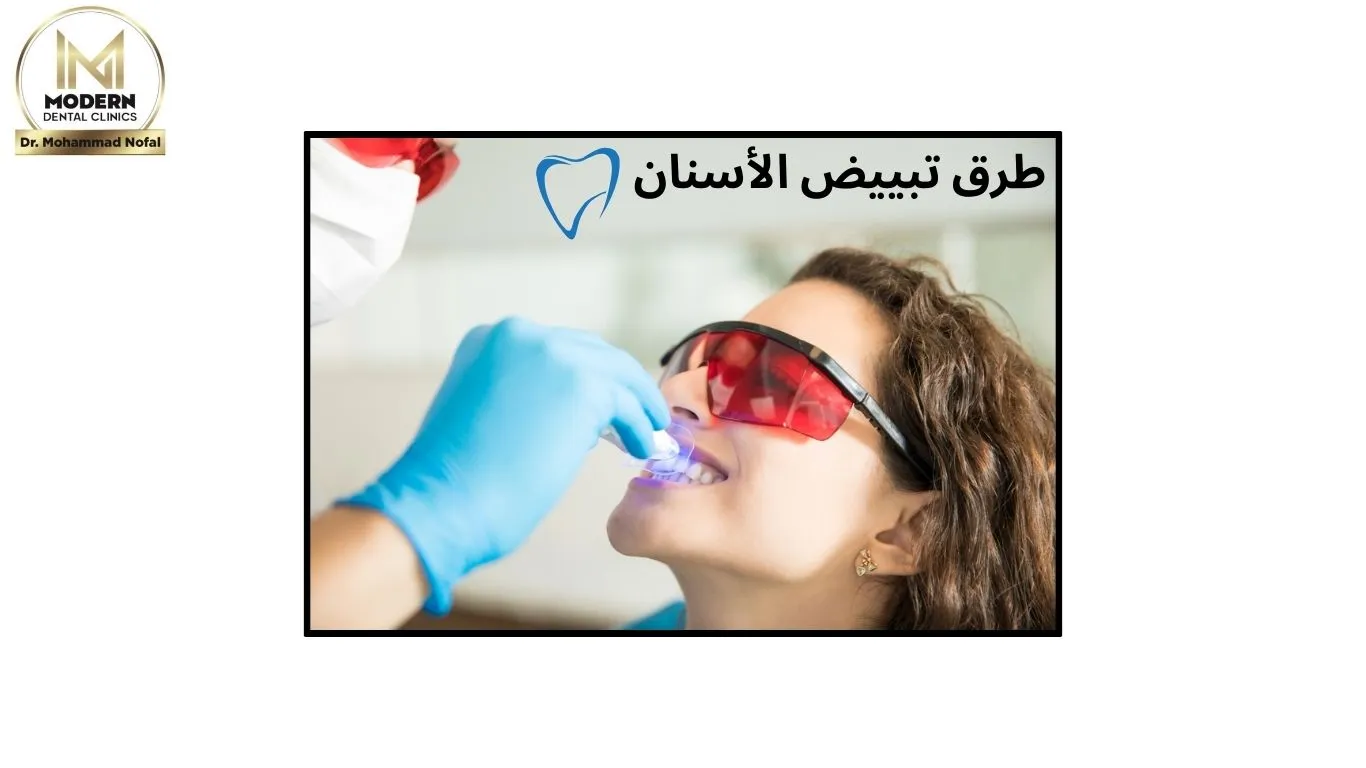
Laser Teeth Whitening
This is one of the newest methods through which teeth can be whitened easily, as beautiful white teeth can be achieved within a short period.
This method is usually carried out in several steps:
The dentist uses a tooth shade chart to determine the appropriate color for the smile you may have after whitening.
A polishing tool is then used to polish the teeth and remove any remaining residue.
The dentist places a retractor to keep the mouth open and a special rubber dam to isolate the teeth and protect the gums from the whitening agent so that it does not touch any parts of the mouth.
The dentist applies the whitening agent, such as hydrogen peroxide, and leaves it for 15 to 30 minutes.
The laser is directed onto the teeth directly for an hour or an hour and a half.
Read also: What is laser gum contouring surgery and does it carry risks?
Teeth Whitening With Zoom Technology
Zoom technology is one of the modern techniques that help achieve a beautiful smile and bright white teeth within a short period of time, taking half an hour to an hour and usually being a pain-free session.
As for the procedure, it is as follows:
The dentist performs a professional cleaning of the teeth before Zoom whitening.
Whitening gel, which often contains hydrogen peroxide, is applied to the teeth.
The gel is left for 15 minutes, then the Zoom device is turned on and directed toward the teeth.
This process is repeated for 2 to 3 sessions, each lasting 15 minutes, bringing the treatment time to 45 minutes.
The dentist applies a paste containing fluoride to protect the enamel and teeth from sensitivity.
Porcelain Teeth
Some people may not wish to use chemicals or laser beams, but there is no need to worry, as there is always a solution.
One of the most prominent teeth whitening methods is porcelain veneers, a wonderful alternative that can be placed on the teeth, especially those with stubborn stains that cannot be whitened.
This is done by removing a small part of the enamel from the front of the teeth to make room for the porcelain veneers so they can be fitted to the shape of the tooth.
Among the most prominent advantages of this method:
No need to repeat it annually.
They do not leave stains on the teeth.
They last for up to 15 years and more with proper, ideal care.
Read also: The difference between veneers and zircon restorations
Porcelain Crowns and Bridges
If a person wishes to use porcelain veneers but their teeth are too thin to support them, porcelain crowns and bridges may be a better option.
Instead of covering only the front part of the tooth, porcelain crowns fit over the natural tooth structure like a cap.
It is worth noting that if a person needs multiple crowns in a row, a porcelain bridge can be used instead in this case.
Teeth Whitening Trays and Gels
One of the teeth whitening methods in the dentist's office is making whitening trays for the teeth (a dental impression) that are custom-made for the person and fit the teeth exactly, after which a gel determined by the dentist is applied.
These trays are worn on the teeth for 6 hours during sleeping hours, or for whatever duration the dentist recommends according to the person's needs and preferences.
It is worth mentioning that these trays often contain carbamide peroxide instead of hydrogen peroxide, which, although it does not whiten the teeth quickly, makes the teeth less prone to sensitivity if it is accidentally applied to any part of the mouth.
Teeth Whitening Methods: At Home
Some approved products prescribed by the dentist can be used at home to maintain the results of in-office teeth whitening. Among the most prominent of these products are the following:
Whitening Strips
Whitening strips are often easy-to-use options, but they need a longer time to achieve the desired results, depending on the strength of the peroxide they contain.
Whitening Toothpastes
Whitening toothpaste contains mild abrasives that work to remove surface stains, while others may contain additional polishing agents and special chemicals that are more effective against stains than regular toothpaste.
It is worth noting that whitening toothpastes are not designed to actually whiten the teeth.
What Are the Advantages of In-Office Teeth Whitening?
After learning about the difference between in-office and at-home teeth whitening methods, you have surely noticed that in-office procedures have advantages that surpass those done at home, including:
Observing immediate, long-lasting results within a short period.
Undergoing safe procedures under the dentist's supervision.
Not spending money on treatments that do not really work.
Are Teeth Whitening Treatments Painful?
No, most procedures are painless, but in some cases the teeth may become sensitive; however, the symptoms disappear within 48 hours.
When Does Teeth Whitening Not Work?
First, you should know that the effectiveness of teeth whitening depends on multiple factors, including:
The cause of the change in tooth color.
The type of procedure used.
The dentist can review any areas of the teeth that the whitening agent may not be able to reach due to persistent issues, including:
Areas excessively exposed to fluoride.
Previous dental procedures, such as porcelain teeth.
A tooth that has been exposed to something that made the inner layer of the tooth dark.
Exposure to antibiotics during tooth formation, such as tetracycline.
People who suffer from gum disease or tooth decay.
Nevertheless, most of the methods used rely on other whitening materials that contain compounds that help remove stains and discoloration from the surface of the teeth, thereby improving their color and brightness.
How Long Do Teeth Whitening Results Last?
The duration of teeth whitening results varies depending on the methods used, and depending on the condition of each individual's teeth and how much attention the person gives them.
In general, whitening results often last for about 6 months to a year, after which the color of the teeth may begin to become slightly darker due to daily eating and drinking.
Nevertheless, any of the teeth whitening methods can be repeated whenever the person wishes.
Ways to Maintain Teeth Whitening Results
Regardless of the teeth whitening method, it is important to follow some key tips to maintain the results, which include the following:
Following the dentist's instructions regarding pain relievers, as they may be recommended to relieve sensitive tooth pain after whitening.
Refraining from smoking for at least a week after whitening.
Staying away from very hot and cold beverages for a period of time to avoid tooth sensitivity.
Staying away from foods and drinks that may change tooth color, such as:
Tea.
Coffee.
Soft drinks.
Acidic foods.
Always keeping the teeth and gums cleaned by brushing and flossing at least twice a day, to prevent the buildup of tartar and maintain a white smile for a long time.
Visiting the dentist regularly at least every 6 months.
Whatever teeth whitening method you choose, it is important to consult the dentist first before starting to attempt teeth whitening.
The dentist is able to assess the health of your mouth and teeth and recommend the safest and most effective solution based on your budget and goals.
To get an accurate consultation and a suitable examination with the best techniques, do not hesitate to visit Dr. Mohammad Khaled Nofal's clinic, as he has extensive experience in cosmetic dentistry and dental restorations, whether fixed or removable, and always aims for his patients to achieve the best results.
Sources
- Teeth whitening. (2020, February 28). Johns Hopkins Medicine. https://www.hopkinsmedicine.org/health/treatment-tests-and-therapies/teeth-whitening
- Boonyapanichskul, T., DDS. (2023, December 1). Teeth whitening treatment – types, procedures, fees. MedPark Hospital. https://www.medparkhospital.com/en-US/disease-and-treatment/teeth-whitening-treatment
- Dentist, A. G. B. H. C., & Glosman, A. (2022, August 10). Different methods of teeth whitening: Which teeth whitening procedure is best for you. https://www.arthurglosmandds.com/blog/different-methods-of-teeth-whitening/
- Davenport, T. (2022, June 15). Different methods for teeth whitening. Verywell Health. https://www.verywellhealth.com/teeth-whitening-options-1059027
- Shinde, E. (2023, August 17). Professional teeth whitening: Everything you need to know. Forbes Health. https://www.forbes.com/health/dental/professional-teeth-whitening/
- Zoom Teeth Whitening | How it Works and What it Costs. (2018, August 2). Your Dentistry Guide. https://www.yourdentistryguide.com/zoom-whitening/