
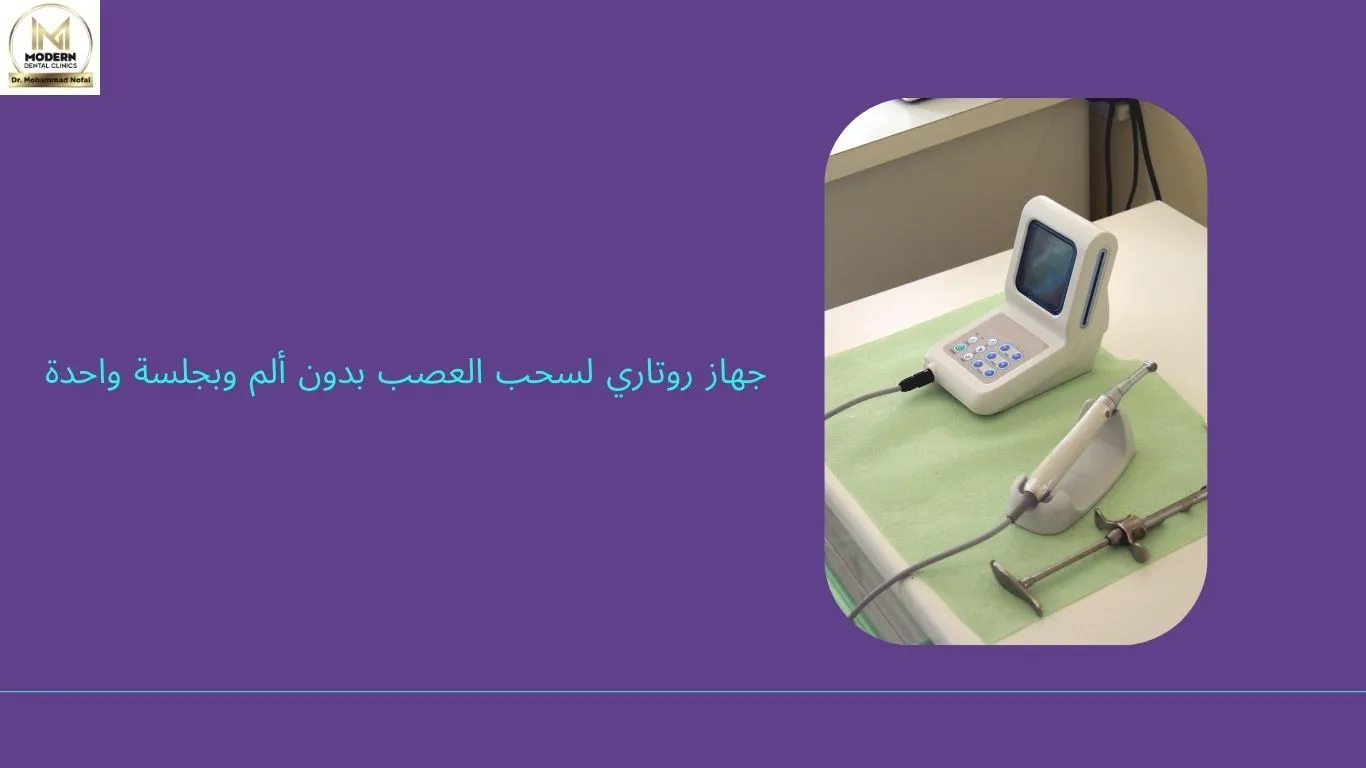
The rotary device for root canal treatment
Nerve extraction, nerve filling, or root canal treatment is a therapeutic procedure for some dental problems such as decay that affects the tooth's nerve. This treatment aims to relieve toothache and preserve the tooth. Recently, the methods and techniques related to dentistry have developed, so that it has become possible to complete a root canal in just one session and with the least pain possible, using a rotary device for root canal treatment.
So what is this device? Is it effective in root canal treatment? These and other questions will be answered by Dr. Mohammad Khaled Nofal, specialist in dentistry, cosmetic dentistry, and dental implants, in this article.
The rotary device for root canal treatment
The rotary device for root canal treatment is one of the latest techniques for treating the tooth's nerve. It relies on electricity to generate a regular, slow rotational motion.
It is worth noting that this device is used to clean the tooth canals containing the infected nerve in a precise, fast, and effective manner, which reduces treatment time and improves treatment outcomes.
Steps for using the rotary device for root canal treatment
The steps for root canal treatment with a rotary device include the following:
Creating a cavity in the root canal
Before starting any root canal procedure, an access cavity must be created inside the structure of the affected tooth so that the dentist can reach the pulp.
This step involves applying local anesthesia around the affected area, then creating an opening by removing the damaged parts.
Locating the canals
After reaching the pulp cavity, the location of each canal is determined precisely, and this is usually done using an electronic apex locator device (APEX LOCATER).
It is one of the modern devices that help determine the length and depth of the root canal without the need for radiographic imaging in most cases, and this is a decisive factor in the success of the treatment.
Choosing the appropriate instruments
Once a suitable cavity is created, an appropriate nickel-titanium endodontic instrument is selected based on the anatomical structure and shape of each canal.
Starting to clean the root canal
While using the rotary device to clean the root canal, light pressure is applied as it is moved back and forth until the dentist is sure that the canal is clean.
Sealing the cavity
Finally, the doctor places a material to cover the root canal and the opening of the upper part of the tooth.
Read also: Dental abscess.
Advantages of the rotary device for root canal treatment
The rotary device offers many advantages, which include the following:
Reducing the duration of root canal treatment
Using traditional instruments and manual files requires more time and effort, whereas what distinguishes the files of the rotary device is their rotation speed and their great cutting ability. As a result, the time spent in nerve treatment and filling the tooth roots is much less.
Ease of the procedure
The files used in the rotary device are made of durable materials such as nickel-titanium, which are five times more flexible than traditional files.
This makes them able to clean the nerve canals and reach the curved areas deep in the tooth's root canal while preserving its natural anatomical shape.
Increasing the success rate
There is no denying that using modern techniques and advanced methods in nerve filling increases treatment success rates.
Therefore, the rotary device for treating the tooth's nerve increases the success rate of dental nerve treatment due to its high ability to clean and widen the canals well and precisely.
The flexibility of the files made of nickel-titanium also makes them less prone to breaking or separating inside the nerve canals.
Instructions after root canal treatment
Recovery from root canal treatment usually takes less than a week, but if you feel persistent pain for more than a week, you should consult the dentist.
You can follow some of the instructions that Dr. Mohammad Nofal provides after a root canal, which may help you recover more quickly, including:
Be sure to eat soft foods in the first few days after treatment, such as boiled pasta, mashed potatoes, cheese, juices, and yogurt.
Avoid chewing on the treated tooth.
Commit to brushing your teeth after every main meal, and use dental floss once daily.
Try to avoid smoking.
Brush your teeth after every meal, and use dental floss once daily.
Rinse with an antibacterial mouthwash.
It can be said that the rotary device is an effective technique in the field of dentistry, offering many advantages including efficiency, speed, and precision, which helps improve and reduce the duration of treatment.
Given our keenness on the patient's comfort and to ensure fast and more effective treatment, Dr. Mohammad Nofal's clinic provides the rotary root canal device and other modern techniques for root canal treatment in a single session.
References:
Suhaib, F. (2020, July 21). Rotary endodontics. Friendly Dental of Worcester. https://friendlydentalofworcester.com/rotary-endodontics/
Modern Dental Solutions. (2016, June 24). Rotary Endodontics – modern dental solutions. https://cynthiacouchdmd.com/rotary-endodontics/#:~:text.
Medical, C., & Medical, C. (2024, March 21). How to use rotary endodontic instruments for success – CICADA Medical. CICADA Medical. https://cicadamedical.com/how-to-use-rotary-endodontic-instruments-for-success