
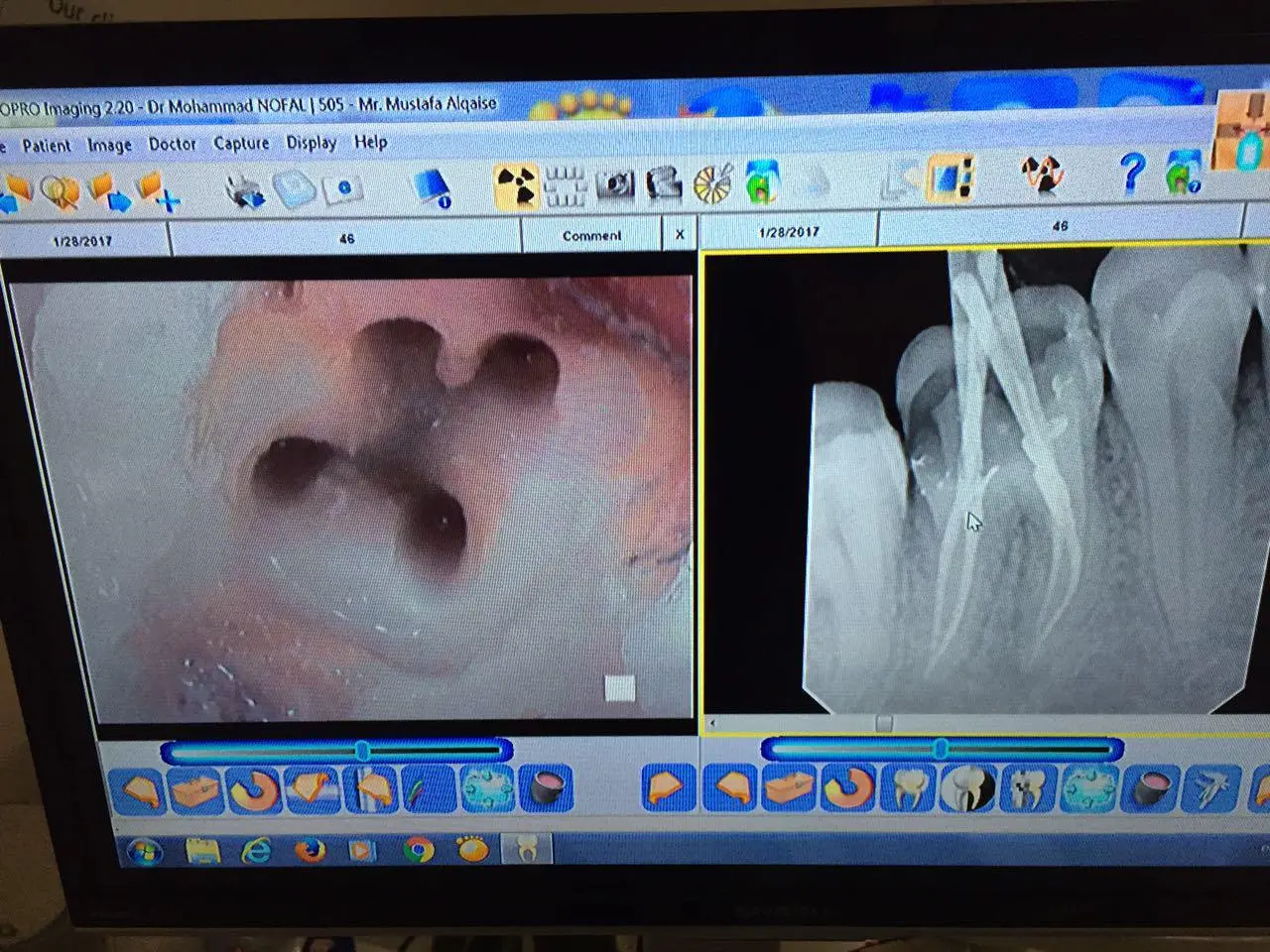
Root canal treatment for teeth stands out as one of the most effective treatments for preserving damaged teeth and saving them from extraction.
In addition, this procedure is performed with the aim of relieving pain and preventing the spread of infection to the tissues surrounding the teeth.
In this article, Dr. Mohammad Khaled Nofal, specialist in dentistry, cosmetic dentistry, and dental implants, explains in detail the most important information about root canal treatment.
What is meant by root canal treatment?
Root canal treatment is a dental procedure that aims to treat teeth suffering from damage or inflammation in the internal pulp.
The dental pulp is the soft tissue found inside the tooth, and it contains the nerves and blood vessels. When this pulp is damaged due to deep decay, injuries, or dental infections, it can lead to severe pain and swelling, which necessitates the need for root canal treatment.
As a result, the damaged or infected tooth is preserved rather than extracted.
Read also: Tooth abscess, its causes and treatment methods
Steps of root canal treatment
Here are the stages of root canal treatment:
The dentist examines the tooth and determines the extent of pulp damage or inflammation using X-rays to identify how deep the problem is.
The area surrounding the tooth is anesthetized to ensure the patient does not feel any pain during the procedure.
The dentist opens the upper part of the tooth to access the root canals and the damaged pulp.
The damaged pulp is removed and the nerve canals are cleaned thoroughly to ensure the elimination of any remaining bacteria and to prevent any future infection.
After sterilizing the canals, they are filled with a special material to seal them and prevent bacteria from leaking back in, or a crown may be placed to protect the tooth and restore its natural function.
Benefits of root canal treatment
Among the most notable benefits of this treatment:
Relieving the pain caused by inflammation or damage to the nerve.
Avoiding tooth extraction and preserving natural teeth.
Protecting the surrounding tissues from the spread of infection.
Restoring the natural function of the teeth.
How long does this treatment take?
The duration of root canal treatment depends on several factors, including the complexity of the case and whether the tooth has branched roots or is in a very poor condition.
However, the treatment usually takes from one to three sessions, and the duration of a single session is 30 to 60 minutes, and it may reach an hour and a half depending on the condition of the affected tooth.
In conclusion, root canal treatment is an essential procedure for maintaining dental health and preventing tooth loss, in addition to preserving natural teeth for as long as possible.
At Dr. Mohammad Nofal's clinic, this treatment is provided with the highest levels of competence and professionalism, using the latest techniques and best practices to ensure the patient's comfort and the success of the treatment.
Book your appointment today and discover how we can achieve a perfect smile with the latest techniques!
Sources
- Chavarriaga, M. (2024, March 14). Nerve Treatment vs Root Canal: Differences you should know in 2024 – East Orange Endodontics. East Orange Endodontics. https://eastorangeendodontics.com/blog/nerve-treatment-vs-root-canal/#:~:text=Nerve%20Treatment%3A%20Appropriate%20when%20the,the%20entire%20root%20canal%20system
- An overview of root canals. (2023, August 27). WebMD. https://www.webmd.com/oral-health/root-canals
- Dentists in Nowra: Shoalhaven Dental Surgery and Implant Centre, NOWRA. (n.d.). https://dentistnowra.com.au/Root-Canal-Treatment.html