Dental health and beauty are an essential part of a person's overall healthcare, but due to a range of causes such as injuries, decay, or aging, some people may need to use a removable denture.
It is an effective solution for restoring the natural functions of the teeth and the beauty of the smile.
In this article, Dr. Mohammad Khaled Nofal, specialist in dentistry, cosmetic dentistry, and dental implants, explains the most important information about removable dentures, in addition to how to care for a removable denture and the tips to follow to maintain its cleanliness and longevity.
Removable Dentures
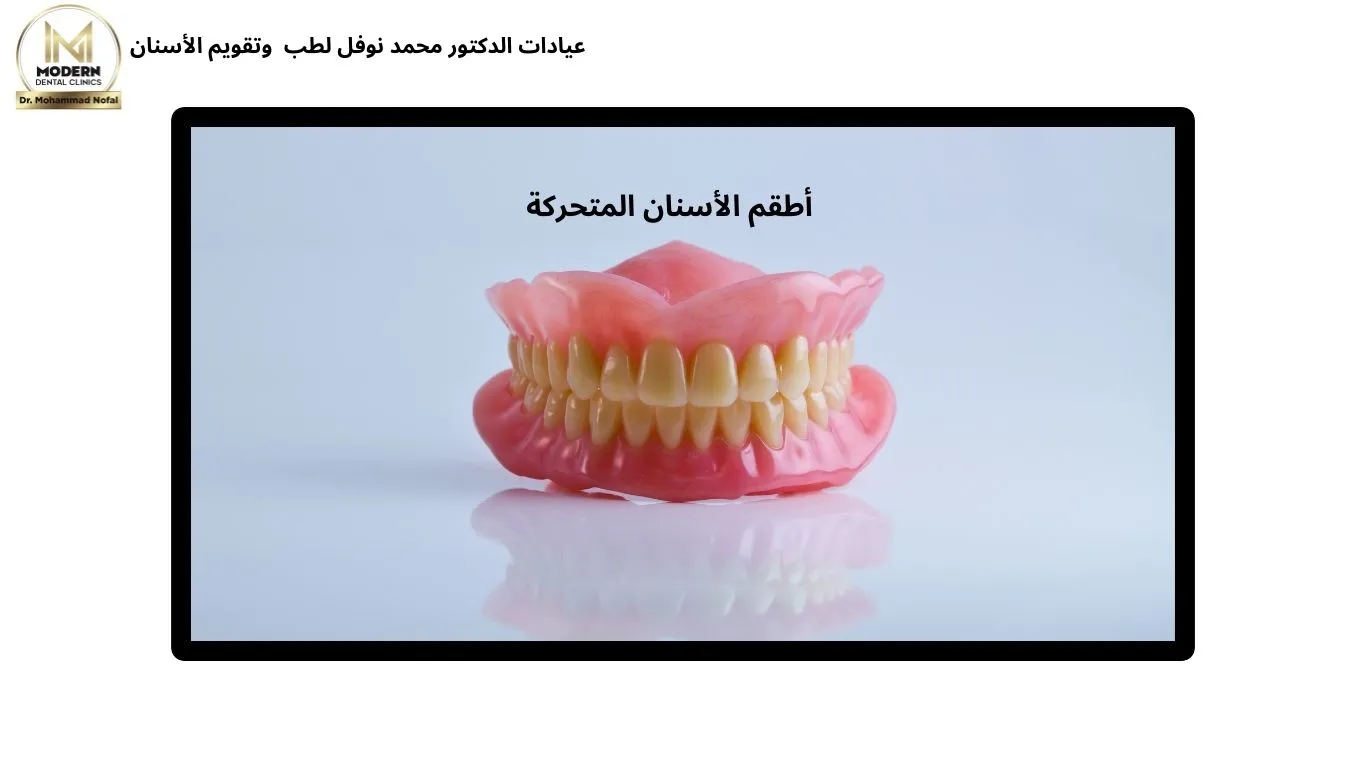
A removable denture is an effective solution for restoring the natural functions of the teeth and the beauty of the smile, as it consists of artificial pieces used to replace missing or damaged teeth, and it is often custom-designed to fit the patient's mouth.
This denture is one of the easy and accessible solutions for maintaining the natural functions of the mouth and the aesthetic appearance of the face.
Types of Removable Dentures
Types of removable dentures vary according to the need and purpose of use, whether to replace partially or completely missing teeth.
Among the most notable types of removable dentures are the following:
Complete Dentures
These are used to replace all the teeth in the upper or lower jaw, or both. In addition, there are several types of them, including the following:
Immediate Dentures
These are among the types used temporarily before permanent dentures, and the reason for this is that once the teeth leave the gums, the gums will naturally begin to shrink.
It is worth noting that immediate dentures may not suit everyone, but they are only temporary until the permanent denture is ready.
Traditional Complete Dentures
These are permanent dentures that look like natural teeth, as they are carefully made to look as natural as possible and serve as an effective, longer-lasting replacement.
Implant-Supported Dentures
These are implants used to support upper or lower dentures. In addition, they provide better comfort and stability for people who use dentures.
Fixed Dentures
These are of the non-removable type, where a row of artificial teeth is fixed with fixed dentures, so the person will not have to worry about them slipping while doing simple things such as eating or speaking.
Partial Dentures
These are used to replace some missing teeth, as they are held in place by metal or plastic frameworks that rely on the adjacent teeth.
Among their most notable types are the following:
Transitional Partial Dentures
This type of denture is used after tooth extraction, as it is worn temporarily until healing, and once recovered, the area becomes ready for permanent implants.
Removable Partial Dentures
These dentures are often slightly more expensive than the previous type, as they are made of a good metal base used to make these dentures less bothersome and lighter on the gums.
In general, we note that the type of removable denture chosen depends on several factors, the most important of which are:
The number of teeth that have been lost.
The condition of the gums.
The jawbone.
Read also: Orthodontics and its modern types
Advantages of Using Removable Dentures
Among their most notable advantages are the following:
Improving oral functions such as speech, chewing, and talking.
Restoring dental functions.
Not changing the position of the remaining teeth in the mouth.
Boosting self-confidence and increasing daily comfort.
Improving the aesthetic appearance of the face.
Disadvantages
These include the following:
Not feeling comfortable at first due to not being used to the new teeth.
Slight irritation occurring after wearing them, especially during the first weeks.
Feeling that the dentures are loose, which leads to difficulty speaking and eating.
How Are Removable Dentures Fitted?
The steps are as follows:
An impression of the mouth is taken of the teeth.
The impressions are sent to the laboratory to serve as the basis for the new dentures.
The dentist makes any adjustments or changes required so that the base fits correctly.
The dentist sends the base to the laboratory again to create a wax denture.
The wax denture is tried on the patient's mouth to measure it, and then it is sent back to the laboratory to manufacture the permanent denture.
It is worth noting that even after the permanent denture is ready, the patient may need to return for additional adjustments until fully adapting to the denture.
How many hours a day can removable dentures be worn?
This depends on the dentist's instructions regarding how much time a person needs to wear the dentures, but generally in the first days the dentist will suggest that the patient wear the dentures all the time, including while sleeping.
This will certainly not be comfortable, but this is the way to determine whether the denture needs adjustment or not. After the adjustments are complete, the patient will be able to remove the denture whenever they wish.
Is denture adhesive always used to fix a removable denture in place?
Removable denture adhesive is a cream, powder, or paste that helps secure the denture in the mouth safely.
However, this adhesive is not used in all cases; rather, there are specific cases in which it is used:
Comfort: Some patients ask the dentist to apply denture adhesive to feel more comfortable when eating or speaking in front of others.
Loose denture: In some cases, a change in the bone structure of the mouth causes the denture to become loose, and denture adhesive is the solution.
Hygiene: When the patient eats, food particles get trapped under the dentures, but with denture adhesive this will not happen.
Ways to Care for a Removable Denture
Dr. Mohammad Nofal offers you the top 5 tips for caring for a removable denture, which include the following:
Handling the Dentures Correctly
It may take some practice to learn how to handle and remove the dentures correctly, as some people may accidentally damage their dentures by taking them out incorrectly.
For this reason, it is important to follow the dentist's tips and instructions on how to remove the denture, especially the first time, which may include:
Holding the denture firmly by the base and not by the teeth to avoid accidentally breaking them.
Placing the denture in a safe, easily accessible place.
Inspecting the denture for any damage before putting it back in the mouth in case it falls.
Storing the Denture Correctly and Safely
When taking the denture out at night and after cleaning it well with a brush, care must be taken to store it correctly.
The dentist recommends storing the denture in a denture-cleaning solution or in water when not being worn, as this keeps it moist and prevents it from drying out or becoming deformed.
In addition, you must make sure not to keep the denture near heat sources, as this will damage it.
Cleaning a Removable Denture Well to Prevent Bacterial Buildup
Cleaning the denture is an important part, as it prevents the buildup of bacteria and plaque, which may cause inflammation and other dental problems. The dentist recommends cleaning the denture 1–2 times a day.
Fortunately, cleaning removable teeth is very easy, as they are simply taken out and cleaned from every angle with a soft-bristled toothbrush and a non-abrasive toothpaste, which helps ensure there are no food remnants left.
Staying Away from Things That Damage a Removable Denture
There are some things that may damage the denture, and they are as follows:
Using an abrasive toothpaste, as it may scratch the surface and cause discoloration of the denture.
Using a toothpaste that contains bleach such as hydrogen peroxide, as it changes the color of the denture.
Cleaning the denture with hot water, as it may damage it and change its shape.
Soaking the denture with its metal attachments in solutions that contain chlorine, as this damages it and causes it to lose its shine and luster.
Read also: The most important teeth whitening methods
Visiting the Dentist Regularly
It is advisable to schedule regular appointments for dental check-ups, as the dentist will suggest how often the patient should visit to have the denture examined and professionally cleaned.
The dentist will make sure the denture is well-fitted without slipping or discomfort, in addition to examining the inside of the mouth to ensure its health.
To get an accurate consultation and a proper examination with the best techniques, do not hesitate to visit Dr. Mohammad Khaled Nofal's clinic, as he has extensive experience in cosmetic dentistry and dental restorations, whether fixed or removable, and always aims for his patients to achieve the best results.
Sources
- Removable dentures – Eastern dental. (2019, November 18). Eastern Dental. https://www.easterndental.com/Treatments/removable-dentures/
- Goetz, N. (2023, April 2). All you need to know about removable full dentures. Ocean Breeze Prosthodontics. https://oceanbreezeprosthodontics.com/restorative/all-you-need-to-know-about-removable-full-dentures-treatment-education-and-more/
- Theory, B. (2023, September 15). 3 ways to care for your removable dentures when they’re not in your mouth. Direct Denture Care. https://www.directdenturecare.com.au/3-ways-care-removable-dentures-theyre-not-mouth/
- Higuera, V. (2021, February 1). How to care for your dentures. Healthline. https://www.healthline.com/health/denture-care
- Higuera, V. (2021b, February 1). How to care for your dentures. Healthline. https://www.healthline.com/health/denture-care#takeaway
- Denture care: How do I clean dentures? (2024, January 19). Mayo Clinic. https://www.mayoclinic.org/denture-care/expert-answers/faq-20058375