
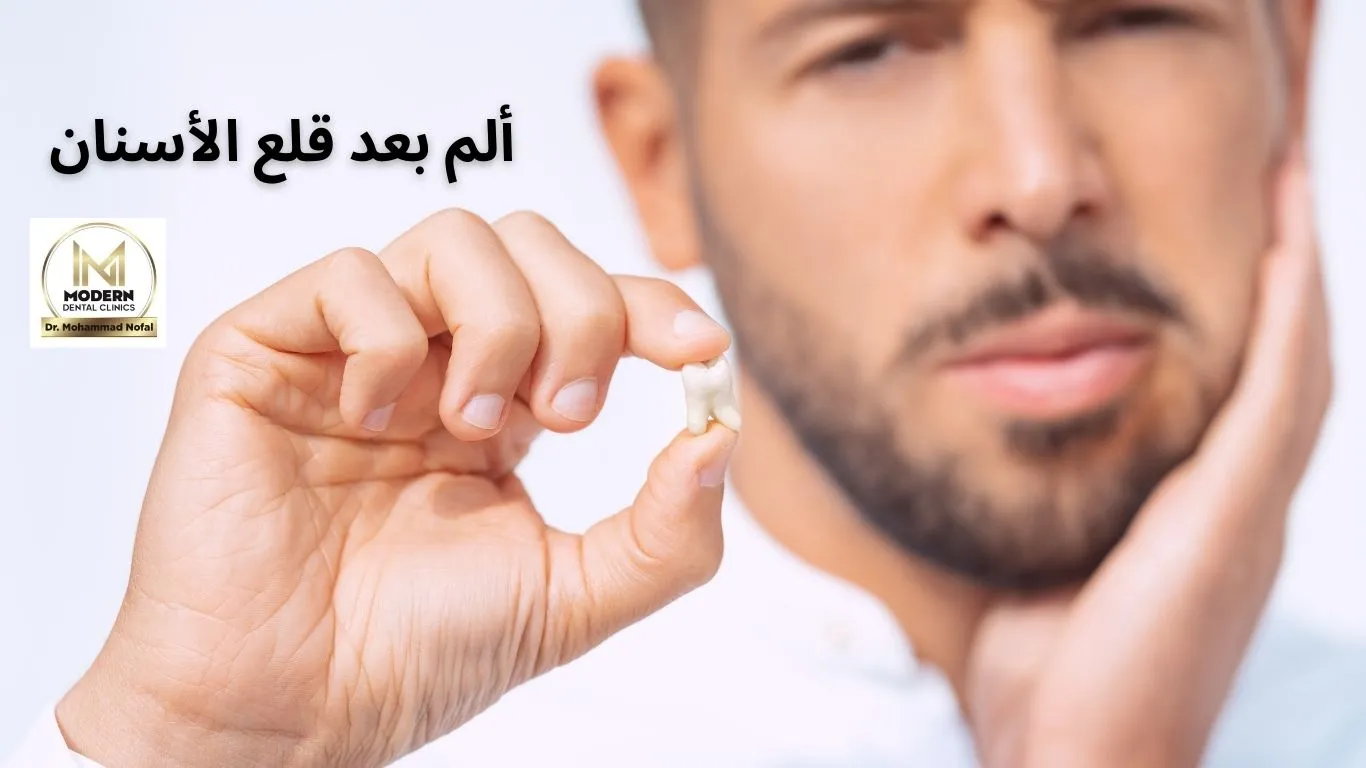
In the world of dental treatments, tooth extraction is sometimes a necessary procedure to ensure the health of the mouth and teeth. Although many people expect severe pain after extraction, each person's experience differs. Therefore, the most common question arises: How long does the pain of tooth extraction last? Dr. Mohammad Khaled Nofal, specialist in dentistry, cosmetic dentistry, and dental implants, answers you in the following article, in addition to providing useful tips to relieve the pain and speed up healing.
Possible causes of pain after tooth extraction
After the tooth extraction procedure, various pains may appear and vary in severity depending on the case and the type of procedure.
Here are some of the possible causes of pain after tooth extraction:
Gum inflammation: Inflammation occurs in the gums surrounding the extraction site, causing pain and swelling.
Bone inflammation: Inflammation may also occur in the bone surrounding the extraction site.
Blood clotting: Sometimes, an unhealthy blood clot may form at the site of the wound, causing pain and swelling.
Wound injury: A wound may form as a result of the extraction, and this wound may become a source of pain if not cared for.
Muscle pain: Tension sometimes occurs in the muscles surrounding the extraction site, causing pain and stiffness.
Sinus perforation: The sinuses are located above the upper molars and are separated from them by a very thin lining. Sometimes it may be damaged during tooth extraction.
How long does tooth extraction pain last?
The pain may last for 24 to 48 hours after the procedure, then begins to fade in the following days. It is worth noting that the complete healing process can take two weeks.
The pain may begin variably and differ according to the individual case and the type of procedure. In general, it may begin as follows:
In the first hours immediately after the procedure
Within the first two hours, the patient may not feel any pain at all, because the local anesthesia used to numb the mouth during the procedure may still be in effect.
The patient may feel mild pain that usually begins in the first hours after the procedure when the effect of the anesthesia or local medications begins to wear off, after which the pain begins to gradually increase over time.
During the first or second day
The pain can increase during the first or second day after the procedure as a result of swelling and inflammation of the area, and it is also possible that some people may experience bleeding during this time.
What to expect within two or three days
It is likely that the patient will continue to feel throbbing pain or occasional pain at the tooth extraction site during the next few days.
The degree of pain and how long it lasts depends partly on the body (and how much the patient cares for their oral health during this period). Even if it is not actively throbbing, the surgical site will be very sensitive and possibly uncomfortable.
Ways to reduce tooth extraction pain
After completing the extraction procedure, some guidelines provided by Dr. Mohammad Nofal can be followed to speed up the healing process and reduce pain:
Changing the gauze regularly
Immediately after the procedure, you must make sure to place clean gauze on the area while being careful to change it regularly, as this will allow a blood clot to form in the socket.
It is worth noting that some people may experience bleeding for two days, so it is recommended to moisten the gauze and then place it on the area while biting down firmly for at least 10 minutes or until the bleeding stops.
Taking prescribed medications
The doctor may prescribe pain relievers, such as ibuprofen or paracetamol, or anti-inflammatories to relieve pain and swelling, and in other cases may recommend an antibiotic to avoid infection. In general, it is preferable to use these medications according to the doctor's instructions.
Applying cold compresses
Cold compresses, or a bag of ice wrapped in a cloth, can be applied to the face next to the extraction area for 10 to 15 minutes to reduce swelling and pain.
Rest
It is recommended to get enough rest and avoid strenuous activities for a day or two after the extraction, as they may lead to the removal of the blood clot.
Eating soft foods
It is preferable to eat soft, cold, or lukewarm foods, and to avoid hard and hot foods for two days after the extraction.
Rinsing with salt water
It is recommended to rinse the mouth with salt water 4 to 5 times daily for five days after the procedure, but you must wait at least one day before starting.
Daily oral care
You must take care of oral hygiene daily through:
Brushing the teeth with a soft-bristled brush and the toothpaste recommended by the doctor.
Using dental floss at least once daily, to avoid the accumulation of food debris and plaque between the teeth.
Rinsing with an alcohol-free mouthwash to maintain the health of the mouth and gums.
When should you contact the doctor because of pain resulting from the extraction?
You should contact the doctor if the following occurs after tooth extraction:
Very severe, unbearable pain.
Pain that does not go away despite taking pain relievers.
A significant increase in swelling, or the swelling persisting for a long time.
A change in the color of the gums to blue or gray.
Pain in the jaw.
A high fever.
The appearance of discharge.
Bleeding that does not stop.
Fatigue or anxiety.
Read also: Wisdom tooth extraction, when is it necessary?
In conclusion of this article, pain after tooth extraction remains a painful and tiring experience, but it is not permanent.
By committing to proper care and following the doctor's guidance, we can reduce the duration and severity of the pain and quickly return to daily comfort.
Patience and care are the key to a quick and proper recovery, so do not hesitate to seek medical advice when needed, because your health deserves all the care and attention.
Sources
- Tooth extractions – pain management, dry socket and self-care | Kowhai Dental. (n.d.). Whangarei Dentist | Northland Dentist | Kowhai Dental. https://www.kowhaidental.co.nz/help-centre/tooth-extraction-pain
- denTalTown_adMeEn, & denTalTown_adMeEn. (2024, February 20). Pain After Tooth Extraction: How Long Does it Last? Town Dental. https://town-dental.com/how-long-does-the-pain-last-after-tooth-extraction
- How Long Does It Take To Feel Normal After Tooth Extractions? (n.d.). Parkeastoms. https://www.parkeastoms.com/blog/how-long-does-it-take-to-feel-normal-after-tooth-extractions/
- Dental surgery and recovery – Overview. (n.d.). Guy’s and St Thomas’ NHS Foundation Trust. https://www.guysandstthomas.nhs.uk/health-information/dental-surgery-and-recovery
- Dental surgery and recovery – Overview. (n.d.-b). Guy’s and St Thomas’ NHS Foundation Trust. https://www.guysandstthomas.nhs.uk/health-information/dental-surgery-and-recovery
- How long does it take for a tooth extraction to heal? | Tuart Hill Dental. (n.d.) https://tuarthilldental.com.au/help-advice/how-long-does-it-take-for-a-tooth-extraction-to-heal/